
)
- What Does Playing Out of Position in Poker Actually Mean?
- Why Playing OOP is the Ultimate Bankroll Killer
- How to Adjust Your Pre-Flop Ranges When Acting First
- How to Control Pot Size Without Positional Advantage
- Strategic Aggression: Mastering the Check-Raise
- Surviving the Turn and River in Deep Stacks
- The Art of the Fold: Letting Go of Marginal Hands
- Frequently Asked Questions
Acting first is a total nightmare. You look down at a decent hand, raise the preflop, and the flop hits the board. Suddenly, the spotlight is on you. You have to make a choice without knowing what your opponent is going to do next.
It feels awful. We have all been there—staring at the felt, wondering if we should continue betting or just give up.
Learning how to play out of position in poker is the ultimate test of your skills. It is the one thing that separates a struggling amateur from a consistent, winning player.
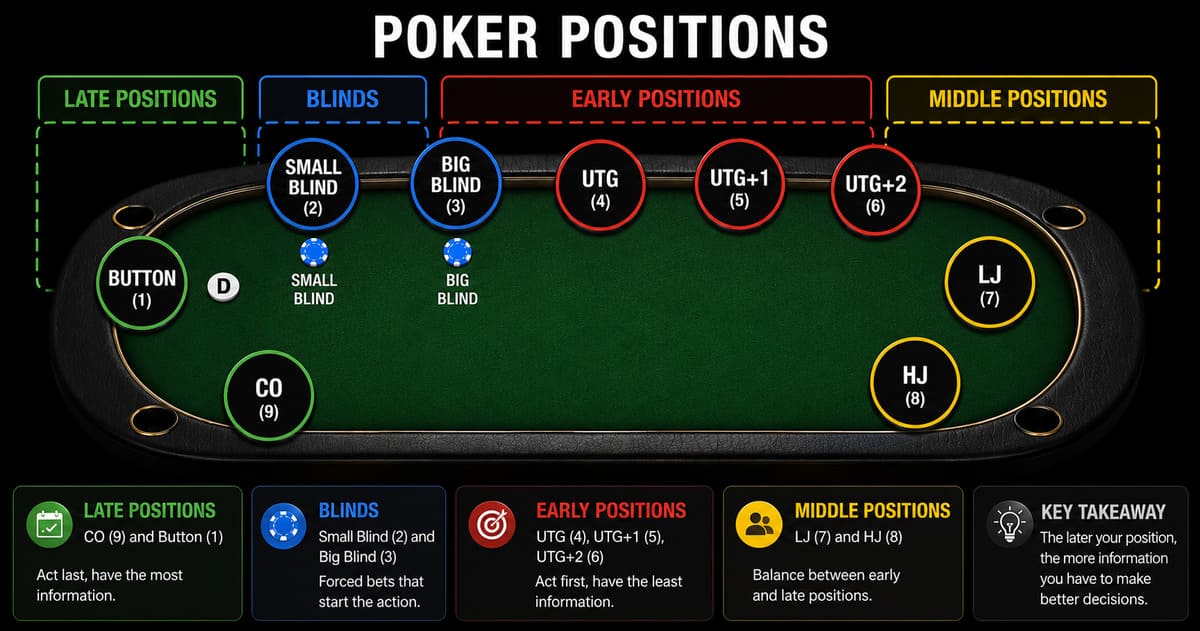
Positional disadvantage strips away your greatest weapon: information. When you act first, you are flying blind. You are forced to telegraph your hand strength while your opponent sits back, watches your move, and dictates the price of the hand. If you do not know how to protect your chips when playing OOP, your bankroll will suffer a slow, agonizing death.
If you are sitting at a table right now and need an immediate framework to protect your chips, use this quick, solver-approved cheat sheet before your next hand.
TL;DR: The Golden Rules of Out of Position (OOP) Play
Tighten Up: Play 15-20% fewer hands from an early position.
Stop C-Betting Air: If the flop doesn't fit your range, check-fold or check-call; don't just blindly fire chips.
Use Pot Control: Keep pots small with one-pair hands by checking the turn.
Weaponize Check-Raises: Punish aggressive late-position players with high-equity draws and monster hands.
Drop the Ego: If the board gets wet and they bet heavily into you, fold your marginal top pairs.
What Does Playing Out of Position in Poker Actually Mean?
Let’s define the term quickly. Playing out of position (OOP) means you are forced to act before your opponent during the post flop betting rounds. In Texas Hold'em, or any poker variant, this dynamic shifts constantly based on the dealer button.
The Danger Zone: If you are sitting in the small blind, or if you opened from an early position and a player on the button calls, you are officially out of position.
The Power Dynamic: Having position is power. Lacking it is a severe liability.
When a player calls your bet from late position, they purchase the right to see what you do on the flop, turn, and river before committing an extra chip.
They see if you show weakness by checking, or strength by betting. You have to guess. This imbalance is why mastering poker postflop strategy is incredibly difficult but absolutely mandatory.
Quick Contrast: In Position vs. Out of Position
| Feature | In Position (IP) | Out of Position (OOP) |
|---|---|---|
| Action Order | Acts Last (Ultimate Control) | Acts First (Telegraphs Strength) |
| Information | Maximum (Sees opponent's move) | Zero (Must guess opponent's intent) |
| Bluff Success | High (Can pressure weak checks) | Low (Easily floated or raised) |
| Pot Control | Easy (Can check back to see free card) | Hard (Must use defensive tactics) |
Why Playing OOP is the Ultimate Bankroll Killer
Human ego guarantees we will mess this up. We hate giving up. When we are the preflop raiser, our brain tells us we deserve to win the pot. So, what do we do? We fire wild continuation bets out of position with total air. Then we get raised. The chip bleeding accelerates.
I see this exact leak play out every time I sit down for a weekend session. Just last weekend, I watched a decent player light two full buy-ins on fire in less than an hour simply because he couldn't handle the discomfort of checking first. He kept opening marginal hands like King-Jack offsuit from early position, completely missed the flop, and then fired desperate, multi-barrel bluffs into late-position callers who refused to budge. It’s a classic trap: your brain tells you that because you were the preflop aggressor, you're "entitled" to win the pot. But poker math doesn't care about entitlement.
The Golden Rule of Poker Fundamentals: You cannot play the same style out of position that you play when you have the button. The math will grind you into dust.
The lack of information forces you to make tighter, more conservative decisions. Without the safety net of acting last, your bluffs fail more often, your value bets are harder to size, and your marginal hands become dangerous traps. Your primary goal when playing oop is simple: damage control.
How to Adjust Your Pre-Flop Ranges When Acting First
Prevention is better than a cure. The easiest way to stop losing money post flop is to stop getting into awful spots preflop. When you are sitting in an early position, or staring down a raise from the small blind, your starting hand requirements must skyrocket.
You need the strongest hands to justify entering the pot from early seats. We are talking premium pocket pairs and high-value broadway cards.
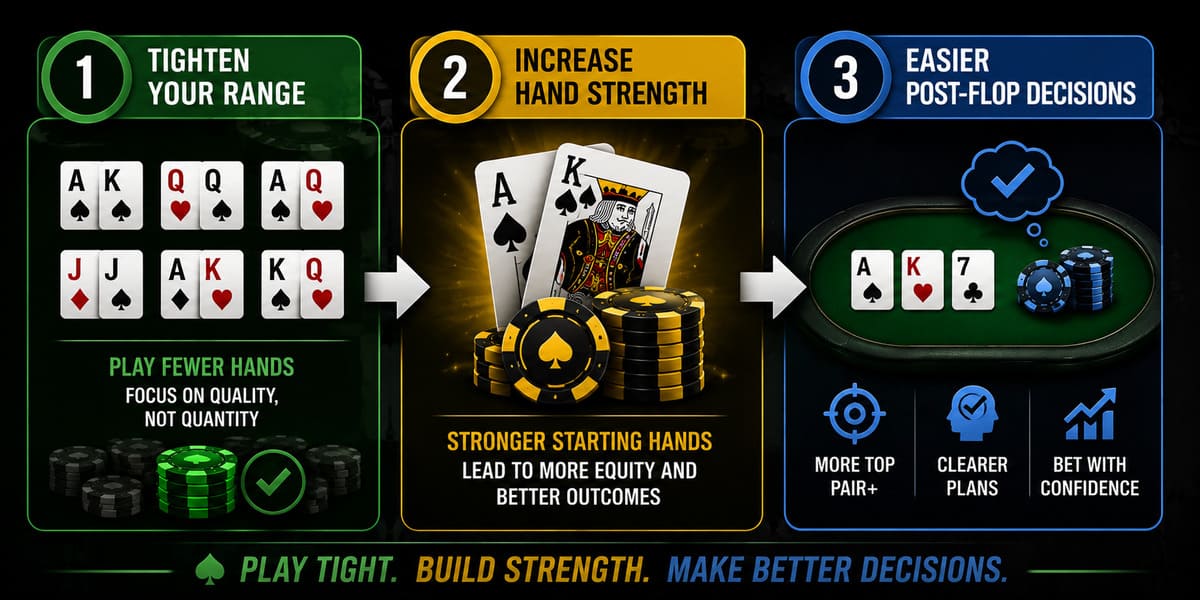 If you raise preflop with a hand like King-Jack offsuit from under the gun, you are begging a better player to call you in position and torture you for three streets.
Essential Preflop Adjustments:
Dump Marginal Hands: Fold weak aces, suited connectors, and low unsuited broadways from early seats.
Optimize Your Raise Size: Do not open too small; give late-position players a reason to fold their speculative hands.
3-Bet or Fold from the Blinds: If someone raises ahead of you and you are in the small blind, do not just flat call. Either raise to take control or throw the hand away.
How to Control Pot Size Without Positional Advantage
Pot control is your best friend when you are navigating in the dark. Because your opponent controls the ultimate size of the pot by choosing whether to bet or raise, you must actively work to keep the pot manageable when you hold a medium-strength hand.
Imagine you hold pocket tens on a Jack-high board. It is a strong hand, but it is rarely the absolute nuts. If you are the preflop raiser, you do not have to keep betting. Checking the flop with a marginal made hand is a brilliant piece of advanced poker strategy.
Why Checking a Marginal Hand Works:
It keeps the pot small. This protects your stack if your opponent happens to have a Jack.
It induces bluffs. When you check out of position, aggressive opponents will try to steal the pot with weaker hands. By checking and calling, you let them hang themselves while keeping the overall risk firmly within your comfort zone.
Strategic Aggression: Mastering the Check-Raise
Defense is vital, but a purely passive strategy will get you run over by aggressive regulars. You have to bite back. If you only ever check-call when you have a decent hand, your opponents will read you instantly. They will value bet you relentlessly. Enter the check-raise.
Opponent Bets (Assuming Weakness) ---> You Raise (Springing the Trap) ---> Momentum Shifts
Check raises are the great equalizers of out-of-position play. They completely disrupt your opponent's positional advantage by turning their aggression against them. When you check, they naturally assume weakness and fire a bet. By raising, you instantly seize control of the hand.
To make this work, you must balance your range. Do this with:
Absolute Monsters: Sets, two-pairs, or the nut straight.
High-Equity Semi-Bluffs: Nut flush draws or open-ended straight draws.
When your opponents know you are capable of check-raising aggressively, they will stop betting into you with air. They will check back more often, granting you the free cards you desperately need.
Surviving the Turn and River in Deep Stacks
Mistakes get exponentially more expensive on the later streets. The flop might cost you a few big blinds, but the turn and river are where entire stacks go to die. This is terrifying in a cash game where deep stacks amplify the pressure of every single choice.
As the board develops, you must constantly re-evaluate your relative hand strength. If you bet the flop and your opponent calls, their range has narrowed. They like their hand. If a scary card hits the turn—completing obvious flush or straight draws—you cannot stubbornly continue firing chips into the void.
Crucial Pivot: Slow down. Checking the turn is often the most prudent play, allowing you to either control the pot size or prepare for a tough fold.
Conversely, if you have a massive hand, you must decide if leading out again is better than checking to trap an aggressive player. Defaulting to caution on later streets will save you countless buy-ins over your career.
The Art of the Fold: Letting Go of Marginal Hands
Ego is the ultimate bankroll killer. Sometimes, you do everything perfectly. You raise premium cards preflop, you hit top pair on the flop, you bet, and the player calls. Then the turn brings a horrible card, you check, and they fire a massive bet. It hurts. You want to call. You want to see if they are bluffing.
Playing out of position means learning how to walk away.
Winning the pot is not always the objective; sometimes, the goal is simply losing the absolute minimum. A strong hand preflop does not entitle you to a victory at showdown. If your opponent represents a hand that beats yours, and you are acting first with zero control over the river action, folding is the most profitable play you can make. Great poker players know how to fold a decent hand out of position and live to fight another day.
Frequently Asked Questions
What is the biggest mistake players make out of position?
The absolute biggest mistake is playing too many weak hands preflop. Players hate folding, so they call raises from the blinds with easily dominated hands like King-Ten offsuit. Because they are out of position post flop, they face massive pressure and bleed chips across multiple streets.
Should I c-bet every time I raise preflop out of position?
No, c-betting 100% of the time out of position is a massive leak. You should check more frequently when acting first, especially on boards that favor the preflop caller's range (like connected, middle-card boards). Checking protects your stack and allows you to pot-control.
How do I defend my small blind against a late position raise?
You should adopt a "three-bet or fold" strategy from the small blind. Because you are guaranteed to be playing out of position post flop, flat calling creates a mathematical disadvantage. By three-betting your strong hands, you take the initiative and often win the pot preflop.
Is playing out of position different in a cash game versus a tournament?
Yes, stack depth changes the dynamic completely. In deep-stacked cash games, playing OOP is incredibly dangerous because a single mistake can cost you 100+ big blinds. In shallow-stacked tournaments, position matters slightly less because players are often forced to commit their chips much earlier.
When should I check-raise the flop out of position?
You should check-raise when you have very strong made hands (like sets or two pair) for value, or when you have high-equity draws (like a nut flush draw) as a semi-bluff. This balances your range, making it impossible for opponents to easily read your plays.
How do I play a strong hand like top pair out of position on a wet board?
On a highly coordinated board with lots of draws, bet the flop to charge opponents for chasing their draws. However, if the turn completes those obvious draws, you must exercise strict pot control. Checking the turn is usually the safest line to avoid getting raised.
)
Shane C
Shane is a content writer with over 10 years of writing experience. He specializes in poker and casino games and has been chasing the ultimate poker dream and the excitement of hero calls for the last 15 years! Admittedly, he has yet to win any APT nor WSOP title, but he's not giving up!
)
)
)
)
)
)
)