
)
- What Does Pot Size Mean in Poker?
- What Is Pot Control in Poker?
- Why Pot Size in Poker Influences Every Decision You Make
- When Should You Use a Pot Control Strategy?
- How Pot Control Helps You Avoid Over-Committing Chips
- Pot Control vs. Building the Pot: Knowing the Difference
- How Pot Control Keeps Weaker Hands in the Game
- Pot Control on the Turn and River: The Critical Streets
- Common Pot Control Mistakes (And How to Fix Them)
- Does Pot Control Still Work in Modern Poker?
- Frequently Asked Questions About Pot Size and Pot Control in Poker
If you've ever lost a big pot with a hand you thought was good, pot control is probably the concept you were missing. It's one of those ideas that sounds simple on the surface — keep the pot small when you're not sure where you stand — but the execution separates average players from the ones who consistently finish in the black. This guide breaks down exactly what pot size in poker means, why it matters at every stage of a hand, and how a smart poker pot control strategy can protect your stack and sharpen your edge.
Pot Control: The 30-Second Summary
The Core Rule: Keep the pot small when you are uncertain of your standing, and build it aggressively when you hold a monster hand.
When to Use It: Best applied when holding marginal/medium-strength hands, playing out of position, or navigating highly dangerous ("wet") boards.
The Turn Pivot: Checking the turn is the most common and powerful pot control tool available to freeze the action.
The Hidden Value: Keeping pots small early prevents you from getting pot-committed on the river, while quietly inducing bluffs from weaker hands.
What Does Pot Size Mean in Poker?
Pot size is exactly what it sounds like: the total number of chips in the middle at any given point in a hand. But here's the thing — it's not just a scoreboard. The size of the pot directly shapes every decision you and your opponents make going forward.
Think about it this way. A $20 pot on the turn plays very differently from a $200 pot. In the smaller pot, a $10 bet is half the pot and applies moderate pressure. In the larger pot, that same $10 looks weak and invites calls. Every bet you make, every check you throw out — it all has a ripple effect on pot size, and therefore on how much risk you're carrying.
The pot also determines pot odds. When the pot is large and your opponent makes a small bet, you're getting a great price to call with drawing hands or marginal hands. When the pot is small and someone fires a large bet relative to it, your pot odds shrink and your calls need to be more precise. Understanding pot size isn't optional — it's foundational to every postflop decision you make.
What Is Pot Control in Poker?
Pot control in poker is the deliberate practice of managing how large the pot grows based on your hand strength and your read on the situation. The core idea is this: you don't always want to build the pot as fast as possible. Sometimes, keeping things small is the smarter play.
Most poker players understand the impulse to bet every time they have a decent hand. But decent isn't the same as strong. When you're holding a medium-strength hand — say, top pair with a weak kicker, or a pocket pair on a board that could easily connect with your opponent's range — the temptation to bet and build value can actually work against you.
Pot control says: slow down. Check more often. Keep the pot manageable so that if you're behind, you haven't already committed too many chips. It's not about being passive or scared. It's about being precise.
Why Pot Size in Poker Influences Every Decision You Make
Here's something most recreational players overlook. The size of the pot doesn't just influence your decisions — it influences your opponent's decisions too. And that dynamic matters enormously.
When the pot is large, players naturally feel more committed to it. There's a well-documented psychological pull toward protecting the chips already in the middle. Big pots create pressure. They force decisions. If you've built a massive pot with a vulnerable hand, you're suddenly faced with either folding and throwing away everything you've invested, or calling a big bet you're not certain you can beat.
Small pots are forgiving. If someone check-raises you on the turn in a manageable pot, you can fold without a crisis. But in a bloated pot? That same check-raise can feel like a disaster. This is why controlling the pot size from early streets — especially the flop and turn — is such a critical piece of poker strategy.
The best poker players think ahead. They consider what the pot will look like on the river before they decide how to bet the flop. That forward-thinking approach is what pot control is really about.
When Should You Use a Pot Control Strategy?
Pot control isn't a universal tool. Using it at the wrong time is just as costly as not using it at all. Here's when it makes the most sense.
When You Hold a Medium-Strength or Marginal Hand
You flopped top pair. That's a good hand — but it's not a set. It's not the nut flush. It's vulnerable. On many boards, your opponent could be holding two pair, a strong draw, or even a made hand that has you crushed without you knowing it.
In situations like this, pot control lets you navigate to showdown without over-committing. Check the turn. Let your opponent act. If they check back, great — you've seen a free river and kept the pot small. If they bet, you have information, and you've still managed the pot size so your decision isn't catastrophic either way.
When the Board Is Dangerous
Wet, coordinated boards are a nightmare for medium-strength hands. Flush draws, straight draws, potential two-pair combinations — when the board is full of them, even a solid hand can be a coin flip or worse. On these boards, building the pot is essentially building a bigger bomb that might go off in your face.
Pot control here means keeping the pot small enough that even a bad outcome doesn't end your session. You're essentially buying information at a discounted price.
When Your Opponent's Range Is Strong
If you're out of position and your opponent has shown interest in the pot, be careful. A player who has been aggressive — who raised preflop, bet the flop, and is now facing your decision on the turn — likely has a strong range. Trying to build a big pot with a vulnerable hand against a strong range is asking for trouble. Pot control is the sensible hedge.
When You're Out of Position
Being out of position amplifies the value of pot control. You have less information. You act first. If the pot is big, your opponent has more leverage to put you in uncomfortable spots with a well-timed bet or check-raise. Keeping the pot small when you're out of position limits their ability to exploit your positional disadvantage.
How Pot Control Helps You Avoid Over-Committing Chips
One of the biggest leaks in intermediate poker players' games is over-committing to pots they should be letting go. It usually starts innocently enough — a bet on the flop, a continuation bet on the turn, then suddenly you're pot-committed on the river with a hand that probably isn't best.
Pot control breaks this cycle. By choosing to check at key moments, you're essentially pumping the brakes before the hand escalates. You're keeping your options open.
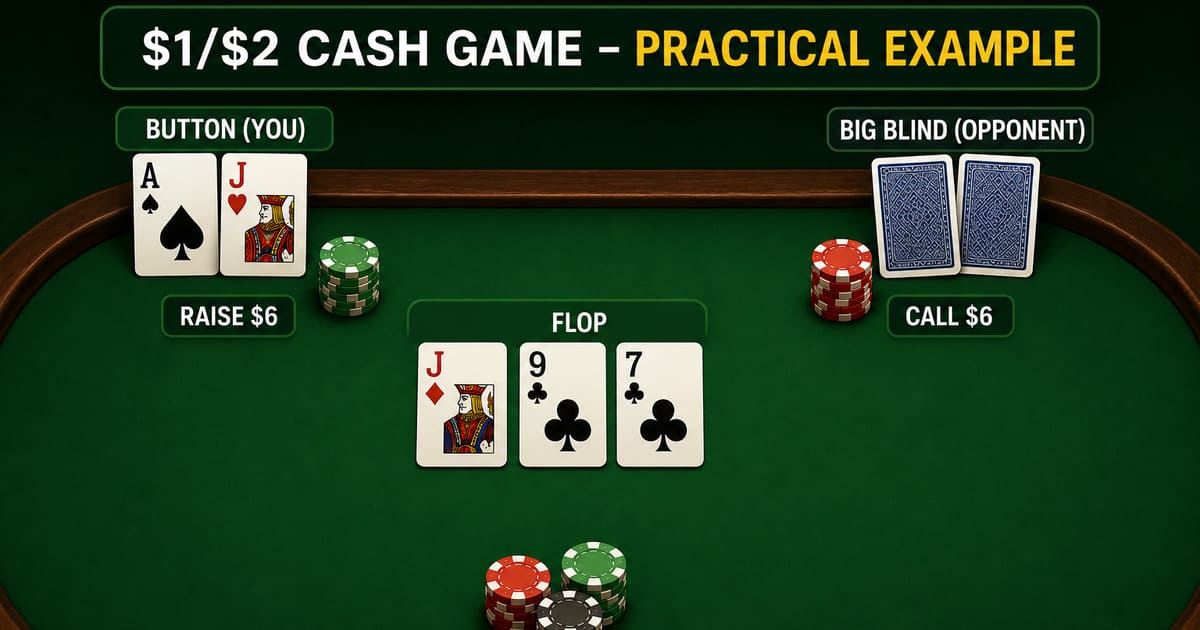 Here's a practical example. You're in a $1/$2 cash game. You open from the button with A-J, and the big blind calls. The flop comes J-9-7 with two suits. You've flopped top pair, top kicker. That's a good hand — but it's not great on this board. There are flush draws, straight draws, and your opponent could easily have a two-pair with 9-7, J-9, or J-7.
If you bet the flop (standard), then fire the turn when a flush completes, you could be building a $100+ pot with a hand that loses to a lot of the big blind's calling range. Pot control says: bet the flop for information and value, then reassess on the turn. If your opponent leads out on the turn or check-raises, you've learned something crucial before you've put your whole stack at risk. If they check, you can check behind and keep the pot small.
Pot Control vs. Building the Pot: Knowing the Difference
This is the tension at the heart of the concept. Pot control is valuable — but so is building the pot when you have a strong hand. Doing both at the right time is the skill.
Strong hands want big pots. When you flop a set, the nut flush, or top two pair on a safe board, you want to build that pot as fast as possible. Bet big. Let your opponent call. If they want to raise, even better. Don't slow-play yourself into a disaster when someone draws out on you because you were too clever.
Pot control is specifically for situations where your hand is good but not great. It's the strategy for navigating hands where you're ahead of some of your opponent's range but behind another part of it. The goal isn't to guarantee a win — it's to minimize how much you lose when you're behind and maximize what you capture when you're ahead.
A useful mental framework: ask yourself before every bet, "If my opponent raises here, what do I do?" If your honest answer is "probably fold," you might want to reconsider betting big. That's pot control thinking in action.
How Pot Control Keeps Weaker Hands in the Game
Here's an angle that often gets overlooked. Pot control doesn't just protect you — it keeps your weaker opponents in the pot and extracting value from them over time.
When you make a small bet or check, opponents with weak hands sometimes find the courage to call or even bluff. A large bet often folds out exactly the hands you want to be called by. By keeping the pot small on early streets, you make it cheap enough for opponents to stay engaged with their marginal hands. Then, when the board runs out in your favor, you can make a value bet on the river that gets called by a worse hand.
This is the quiet profitability of pot control — it's not just about avoiding losses, it's about engineering situations where weak hands pay you off.
Pot Control on the Turn and River: The Critical Streets
The turn and river are where pot control either pays off or falls apart. Here's why these streets deserve special attention.
The turn is typically where pots double or triple fastest. A single bet-and-call on the flop might create a $40 pot, but a bet-and-call on the turn easily takes it to $120 or more. If you're holding a vulnerable hand, this is the moment where pot control matters most. Checking the turn with a medium-strength hand when the board is scary is not weakness — it's precision.
The river is decision time. Either you bet for thin value, check-call, or check-fold. But the beauty of good pot control is that you're making this river decision in a manageable pot. The river bet size relative to the pot is much less punishing than if you'd been building aggressively the whole way.
Good poker players know that making a bad call in a $200 pot hurts a lot more than making one in a $60 pot. Pot control is about creating situations where your mistakes are small and your good decisions are rewarded proportionally.
Common Pot Control Mistakes (And How to Fix Them)
Even players who understand the concept make these errors regularly.
Mistake #1: Pot controlling with strong hands. This is probably the most damaging error. If you have a set and you check the turn "for pot control," you're leaving money on the table and giving your opponents a free card to beat you. Pot control is for medium-strength hands, not monsters.
Mistake #2: Using it as an excuse to be passive. Some players discover pot control and suddenly they're checking every turn and river with any hand that isn't the nuts. That's not strategy — that's fear. Pot control requires judgment. It's a deliberate tool, not a default setting.
Mistake #3: Ignoring your opponent's tendencies. Against passive opponents who rarely bluff, checking is often fine — they'll check behind and you'll see a free card. Against aggressive opponents, checking can invite a bet you weren't prepared for. Know who you're playing against before you decide to control the pot.
Mistake #4: Failing to size bets correctly. Sometimes the right pot control move is a small bet — not a check. A small bet on the turn can accomplish two things: it gets value from weaker hands and it defines the pot size going into the river. A small bet is still pot control if it keeps the pot at a manageable size.
Does Pot Control Still Work in Modern Poker?
This is a fair question. The game has evolved, and some strategies that worked a decade ago have been solved or exploited. But pot control is not one of them.
It works because it's based on logic and math, not exploiting leaks or gaps in opponent knowledge. Managing pot size relative to hand strength is a permanent principle of good poker strategy, not a trend. What changes over time is how precisely you apply it — solver-based play has refined when and how often you should be checking, but the concept itself remains fundamental.
Advanced players today use pot control with more precision. They don't just check any time they feel uncertain — they check specific hands in specific positions for specific reasons, keeping their ranges balanced and their opponents guessing. But the core idea hasn't changed. Medium-strength hands in dangerous spots belong in small pots.
Frequently Asked Questions About Pot Size and Pot Control in Poker
What is pot control in poker and when should I use it?
Pot control is the practice of managing the size of the pot relative to your hand strength. You use it with medium-strength or vulnerable hands when you want to avoid over-committing chips in a situation where you could easily be behind. It's most useful on dangerous boards, out of position, or when facing opponents with strong perceived ranges. Pot control is not passivity — it's a deliberate strategic choice to limit your risk.
Does pot control mean I should always check the turn?
Not always — context matters enormously. Checking the turn is the most common pot control move, but sometimes a small bet accomplishes the same goal while still extracting value from weaker hands. The key question to ask yourself is: "Can I handle a raise or a large bet here?" If the honest answer is no, keeping the pot small — whether by checking or betting small — is the right play.
How does pot size affect pot odds in poker?
Pot size and pot odds are directly linked. The larger the pot, the better the price your opponents get to call a bet, especially if your bet is small relative to the pot. Conversely, a bet that's large relative to a small pot gives your opponents worse pot odds and forces them to need stronger hands to justify calling. Understanding this relationship helps you manipulate how often opponents continue against you.
Can pot control hurt my winnings by keeping the pot too small?
Yes — if misapplied, it absolutely can. Pot control with strong hands is one of the most costly mistakes a player can make. When you have a set, a strong two pair, or the nut flush, you want to build the pot as aggressively as your opponent's calling range allows. Pot control is strictly for navigating hands where your strength is uncertain or marginal. Applying it indiscriminately costs you value.
What's the difference between pot control and slow-playing?
These are related but distinct concepts. Slow-playing usually means deliberately not betting a strong hand to disguise its strength and trap an opponent. Pot control is about managing pot size with a medium-strength hand to reduce risk. Slow-playing is deceptive; pot control is defensive. The biggest distinction is intent — one aims to extract more with a strong hand, the other aims to limit exposure with a vulnerable one.
How does position affect pot control decisions?
Position is critical to pot control effectiveness. When you're in position — acting last — checking the turn is low-risk because you'll act after your opponent on the river. When you're out of position, checking can invite a bet from your opponent, which can put you in a tougher spot. Out of position, you often need a stronger reason to pot control, and you need to be prepared for your opponent to take control of the betting when you do.
)
Shane C
Shane is a content writer with over 10 years of writing experience. He specializes in poker and casino games and has been chasing the ultimate poker dream and the excitement of hero calls for the last 15 years! Admittedly, he has yet to win any APT nor WSOP title, but he's not giving up!
)
)
)
)
)
)
)