- How Do You Determine Which Poker Hand Wins in Texas Hold’em?
- Question 1: Which Pair of Aces Wins When the Kickers Differ?
- Question 2: Which Flush Wins When Both Players Have Five Hearts?
- Question 3: Which Full House Wins, Kings Full or Eights Full?
- Question 4: Who Wins When the Board Counterfeits Two Pair?
- Question 5: Who Wins When the Straight Is Already on the Board?
- How Can You Compare Poker Hands Without Getting Fooled?
Two players flip over their cards. Both look confident. But which poker hand wins?
Spotting a pair or flush is easy enough. Comparing two similar hands is where things get interesting. A hidden kicker, a paired board, or a straight that everyone shares can completely change the result.
Try these five Texas Hold’em practice questions before reading each answer. They start with a familiar kicker problem and move into trickier showdowns. All examples use a standard 52-card deck, with the river already dealt.
How Do You Determine Which Poker Hand Wins in Texas Hold’em?
At showdown, each player makes the strongest five-card hand possible from their two hole cards and the five community cards. The higher hand rank wins the pot. If both players have the same type of hand, compare the relevant card ranks from highest to lowest, using kickers where needed. Identical five-card hands split the pot. Suits never break a tie.
You can use both hole cards, just one, or neither. For the full order, from high card up to royal flush, check Natural8’s poker hand rankings guide.
Question 1: Which Pair of Aces Wins When the Kickers Differ?
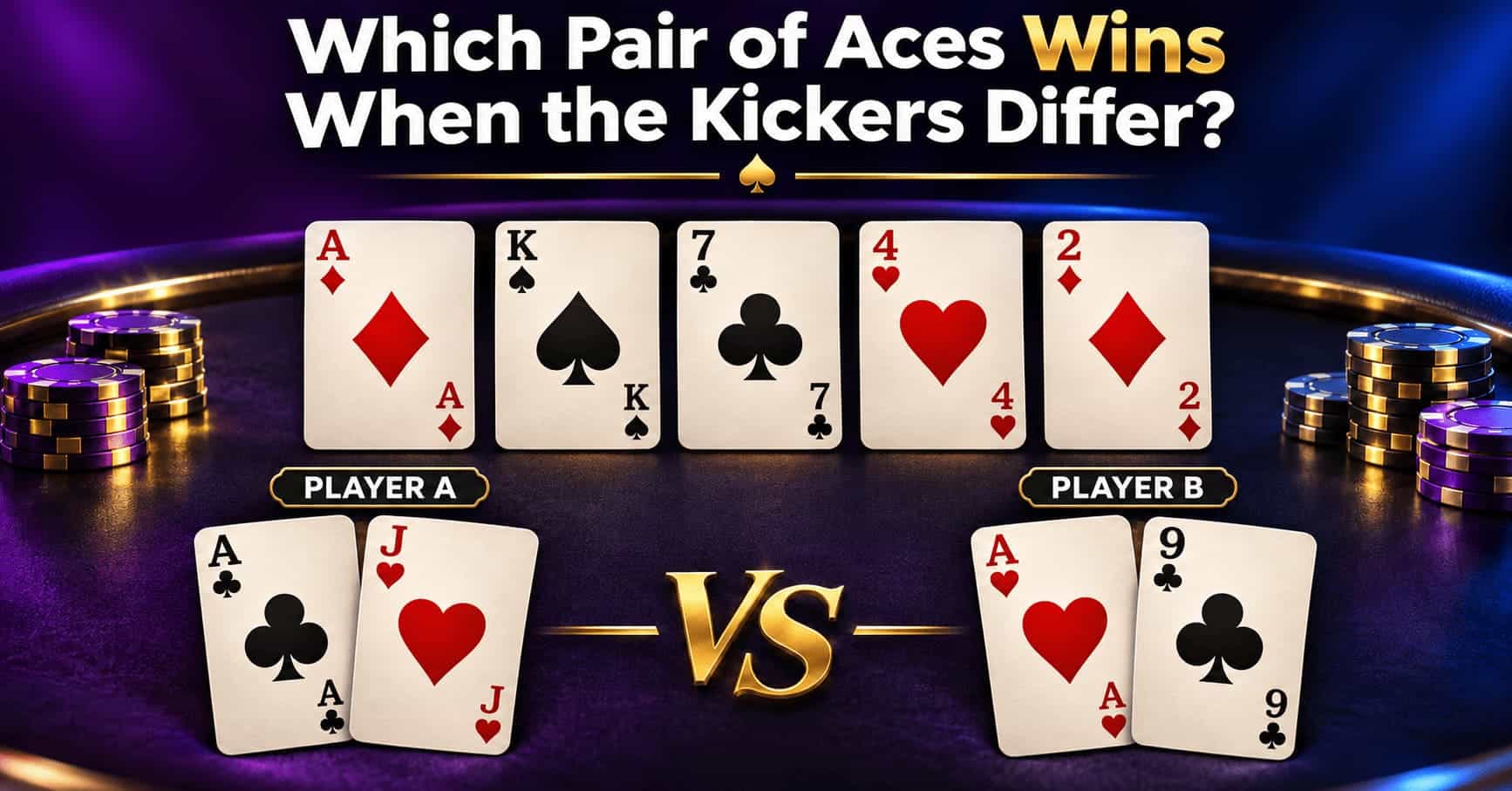
Player A: A JPlayer B: A 9Board (flop / turn / river): A K 7 / 4 / 2
Your pick:
Player A
Player B
Split pot
Answer 1
Player A Wins With the Better Kicker!
Player A’s best five: A A K J 7 — pair of aces, king-jack-seven kickers.
Player B’s best five: A A K 9 7 — pair of aces, king-nine-seven kickers.
Both players have a pair of aces, and both use the king from the board as their highest kicker. So look one card further. Player A’s jack beats Player B’s nine.
This is why simply spotting “top pair” isn't enough. When the pair matches, each remaining card can matter. Need a refresher? Read what a kicker means in poker.
Question 2: Which Flush Wins When Both Players Have Five Hearts?
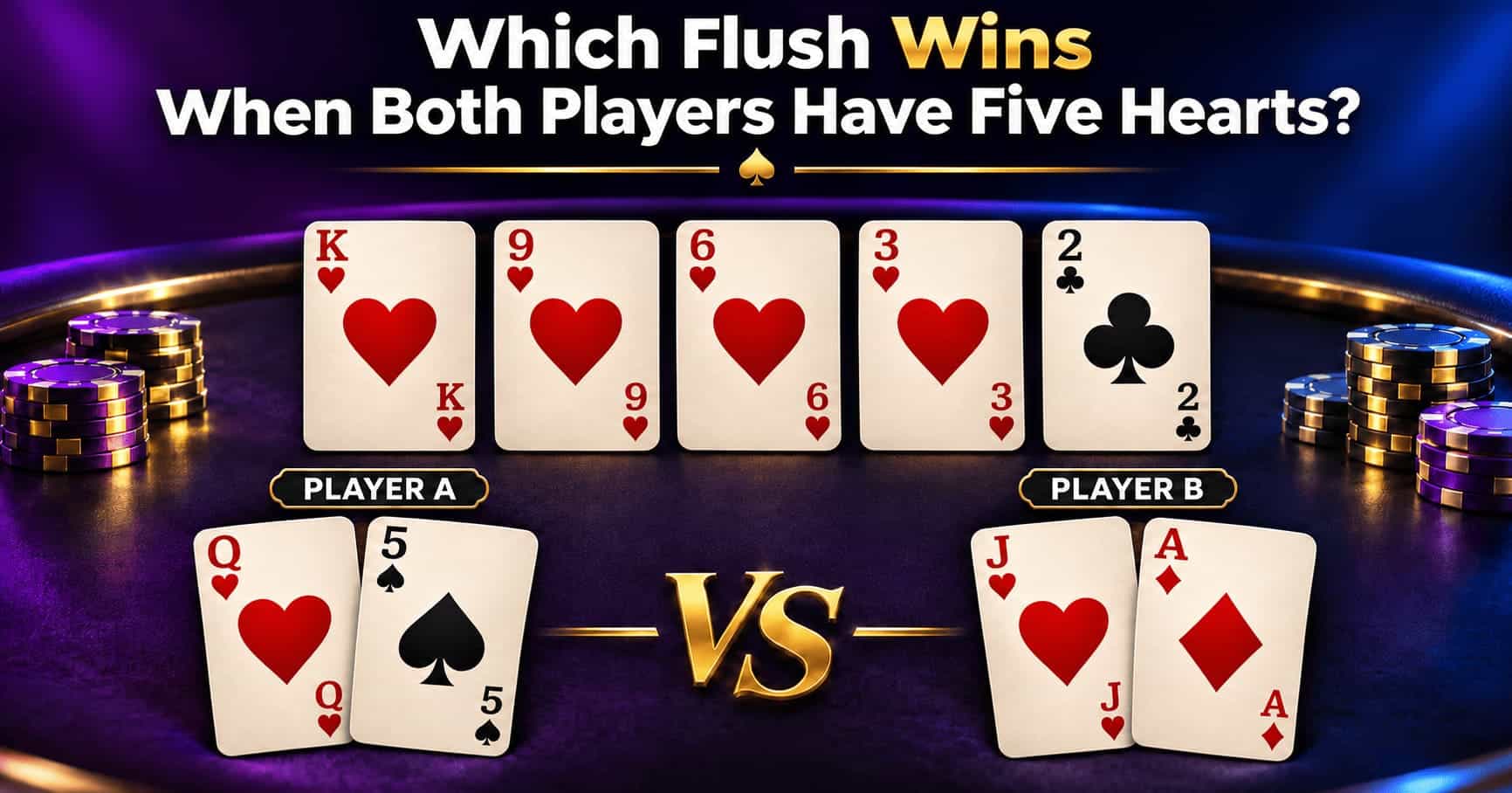
Player A: Q 5Player B: J ABoard (flop / turn / river): K 9 6 / 3 / 2
Your pick:
Player A
Player B
Split pot
Answer 2:
Player A Wins With the Higher Flush
Player A’s best five: K Q 9 6 3 — king-high flush, queen second.
Player B’s best five: K J 9 6 3 — king-high flush, jack second.
Here’s the catch: Player B holds an ace, but it’s a diamond. That ace does nothing to improve the heart flush.
Both flushes start with the same king. Compare the next highest heart: queen versus jack. Player A wins. When comparing cards of the same suit, work down the five flush cards in order; an unrelated high card cannot sneak into the hand. See Natural8’s guide to flushes for more examples.
Question 3: Which Full House Wins, Kings Full or Eights Full?
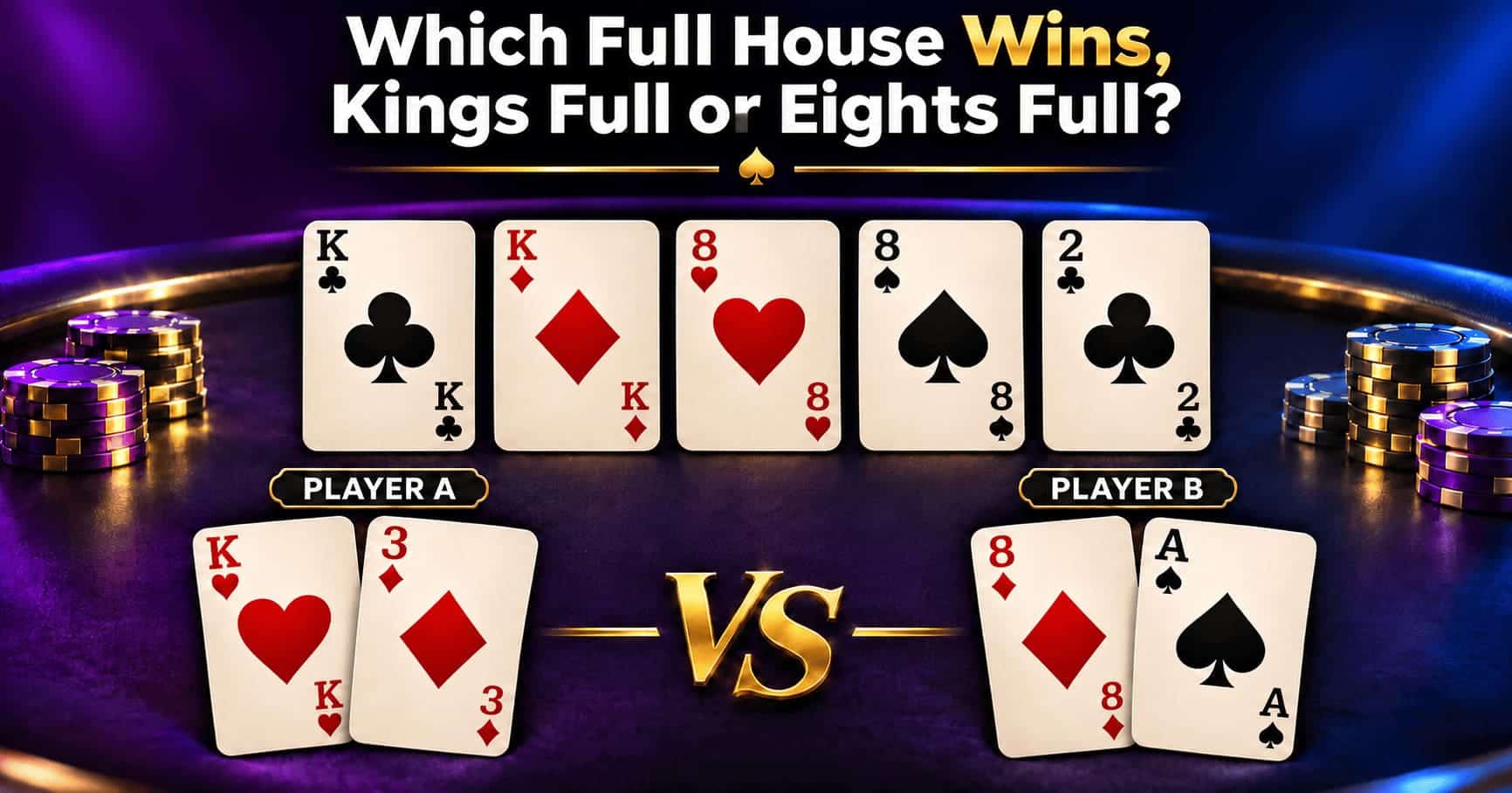
Player A: K 3Player B: 8 ABoard (flop / turn / river): K K 8 / 8 / 2
Your pick:
Player A
Player B
Split pot
Answer 3:
Player A Wins With Kings Full of Eights
Player A’s best five: K K K 8 8 — full house, kings full of eights.
Player B’s best five: 8 8 8 K K — full house, eights full of kings.
Both players have a full house: three of a kind plus a pair. The important detail is which rank appears three times.
Player A has three kings; Player B has three eights. Kings full beats eights full, even though Player B’s paired kings are higher than Player A’s paired eights. When full houses compete, compare the three-of-a-kind portion first. Only compare the pair if those triples match.
Question 4: Who Wins When the Board Counterfeits Two Pair?
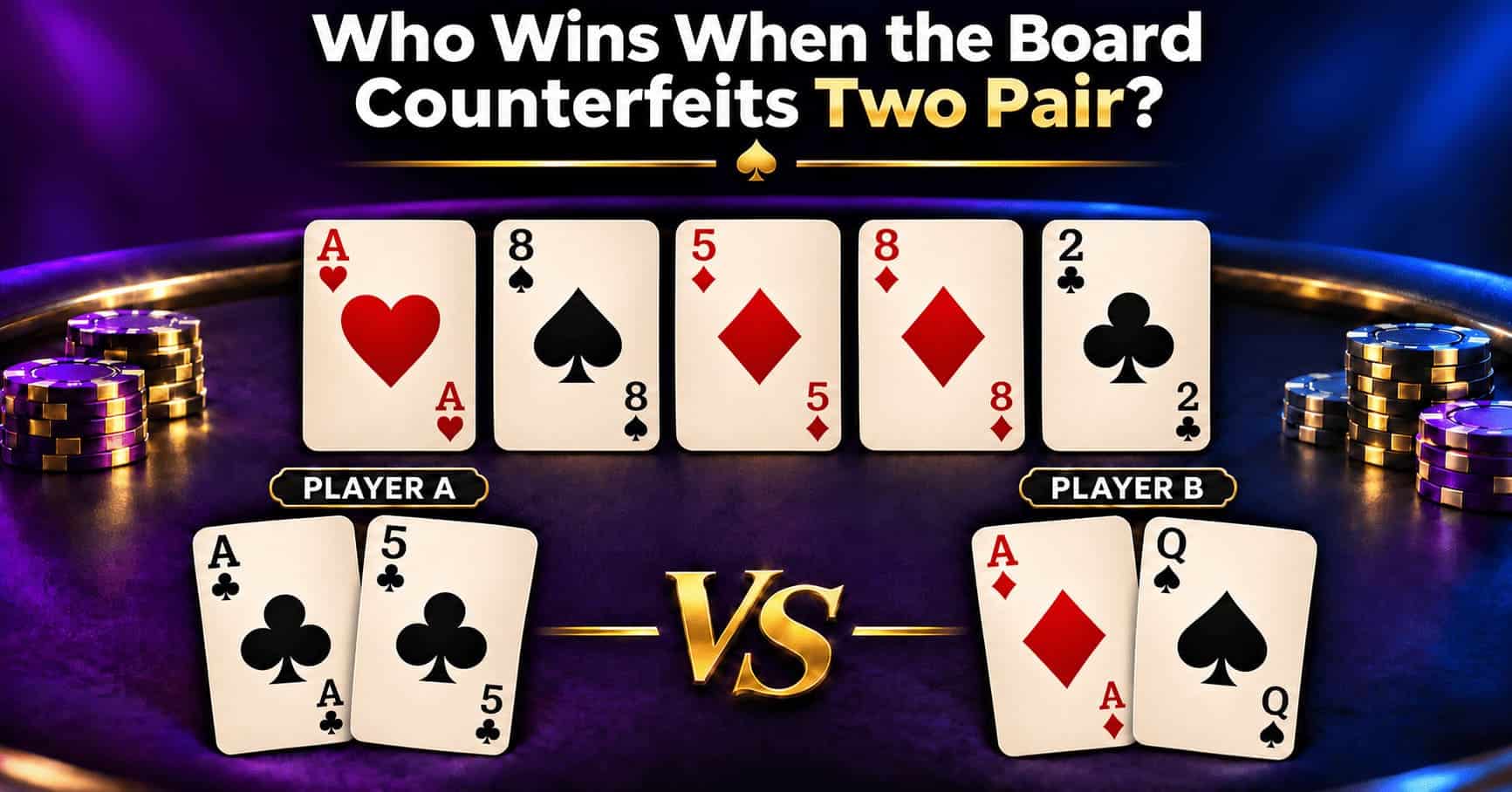
Player A: A 5Player B: A QBoard (flop / turn / river): A 8 5 / 8 / 2
Your pick:
Player A
Player B
Split pot
Answer 4:
Player B Wins After the Turn Counterfeits Player A’s Two Pair
Player A’s best five: A A 8 8 5 — aces and eights, five kicker.
Player B’s best five: A A 8 8 Q — aces and eights, queen kicker.
On the flop, Player A has aces and fives, while Player B has only a pair of aces. Then the second eight arrives.
That board pair is higher than Player A’s fives, so the best two-pair hand for both players becomes aces and eights. Player A’s five no longer counts as a pair in the final five-card hand. Now it’s a kicker—and Player B’s queen wins.
That change is called counterfeiting. It's worth checking whenever the board pairs.
Question 5: Who Wins When the Straight Is Already on the Board?
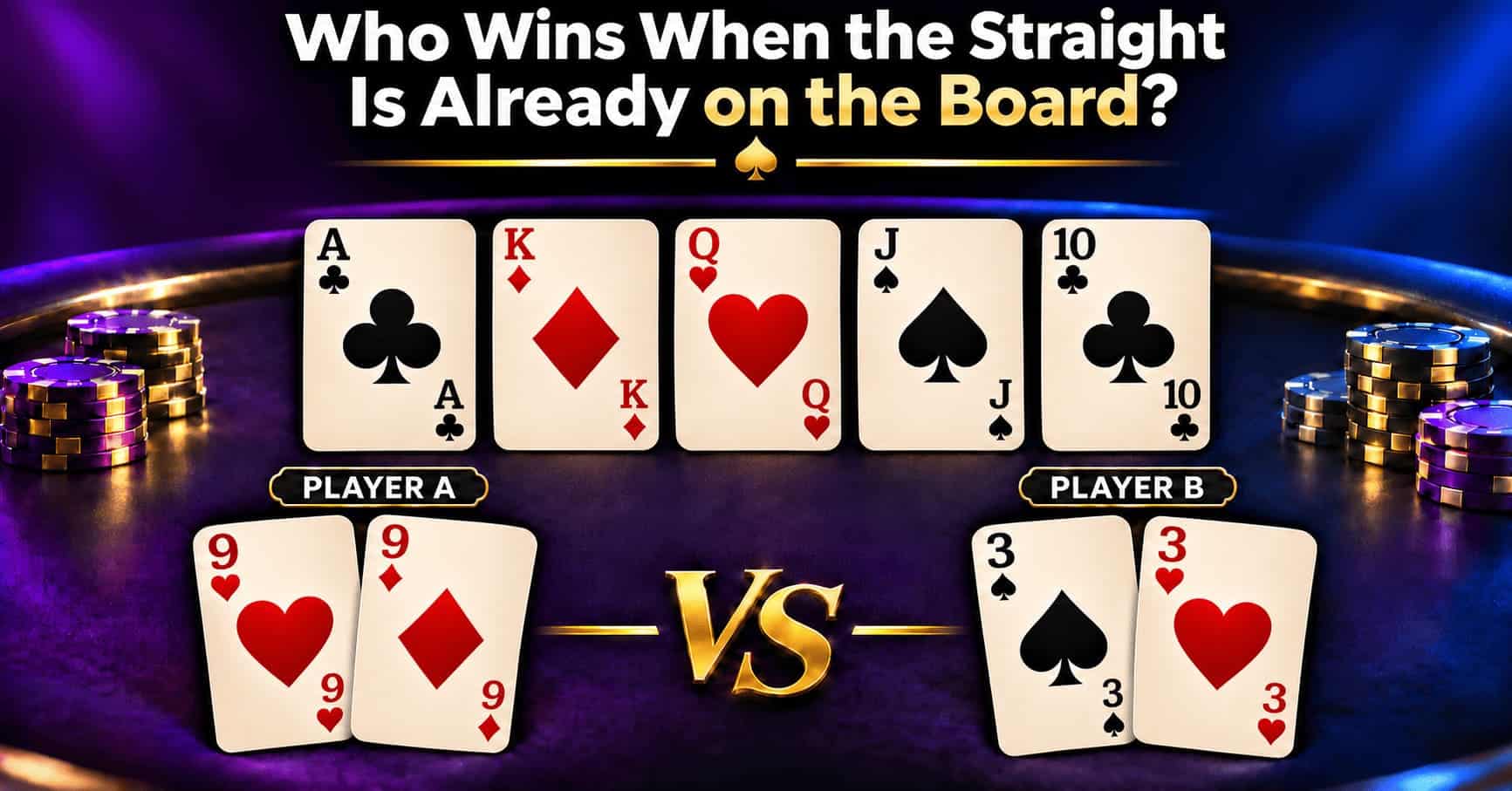
Player A: 9 9Player B: 3 3Board (flop / turn / river): A K Q / J / 10
Your pick:
Player A
Player B
Split pot
Answer 5:
It’s a Split Pot—Both Players Play the Board
Player A’s best five: A K Q J 10 — ace-high straight.
Player B’s best five: A K Q J 10 — ace-high straight.
Player A’s pocket nines beat Player B’s pocket threes as starting pairs. But neither pair matters now. The five community cards already form an ace-high straight, and neither player can make anything better.
Since their strongest five-card poker hands are identical, they share the pot. This isn't a royal flush: the cards aren't all the same suit. For more on straight comparisons, see Natural8’s straight guide.
How Can You Compare Poker Hands Without Getting Fooled?
Before deciding who has the winning hand, run through three checks:
Name each player’s best five-card hand. Don't automatically include both hole cards.
Compare the hand rank first. A flush beats a straight, while a full house beats a flush.
Break ties carefully. Check the relevant card ranks, then kickers. If the same five cards play for both players, split the pot.
How many did you get right—five out of five, or did one of the boards catch you? The aim isn't to memorize these specific deals. It's to get comfortable seeing the best five cards, even when the obvious-looking hand turns out to be the wrong one.

Shane C
Shane is a content writer with over 10 years of writing experience. He specializes in poker and casino games and has been chasing the ultimate poker dream and the excitement of hero calls for the last 15 years! Admittedly, he has yet to win any APT nor WSOP title, but he's not giving up!